Current site:


- Mathematics
- PhD program
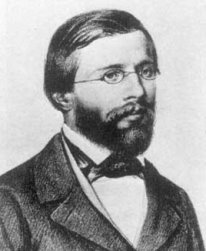
1851, Bernhard Riemann (1826-1866) received his PhD by Gauss in Göttingen and there became the follower of Dirichlet. To this day, the famous "Riemann hypothesis" remains unsolved, so there are many subjects of a doctoral dissertation in the surrounding field of this hypothesis possible.
 PhD program
There are many wide-ranging doctoral graduation possibilities for mathematics in Göttingen. If you like to gain a PhD in mathematics after your bachelor/master studies, your first step is to contact a possible advisor. You can find information about the different areas of research and their agents in the category research. For your support, at least two other persons holding a doctoral degree come along, and you regularly report your advancements to the so-built "thesis committee" during your PhD studies.
The PhD studies normally take three years and take place within the framework
of the study course "Mathematical Sciences".
This study course is part of the
Georg-August University School of Science
(GAUSS).
During the whole time of the PhD studies, the PhD students have to be enrolled at the university of Göttingen.
For further informations cf. here: Doctorate Programme.